


Steel scraper or stone grinding? The truth about your skis

Steel scraper or stone grinding? The truth about your skis
Every season, thousands of skiers face the same choice: should I take my skis in for a stone grind, or is there a better way? The answer is that with a steel scraper, you can take control of your equipment and get better glide by improving the base as you go.
Stone grinding
- Removes some base material
- Heat build-up can close the pores
- Tears the plastic, which creates micro-hairs
- You are locked into one structure
- Cost: 500-1,000 SEK per grind
The Skimateria method
- Cuts fresh base material with precision
- No heat = open pores
- Adapt the structure to the day's weather
- One-off cost for the tools
Why steel scraping wins
Scraping your skis with a professional steel scraper (such as Skimateria's R-Cut) is not just an alternative – it is an upgrade.
1. You cut fresh material (without heat)
A sharp steel scraper cuts away the old, oxidised surface layer with microscopic precision. Because no heat is generated (unlike grinding), the pores in the base stay open and ready to absorb wax.
2. You adapt the structure to the day
With a stone grind, you are stuck with the structure you were given. With the Skimateria method, you can scrape a clean surface (a reset) and then apply exactly the structure (fine or coarse) that the day's race requires. All in 15 minutes in the wax room.
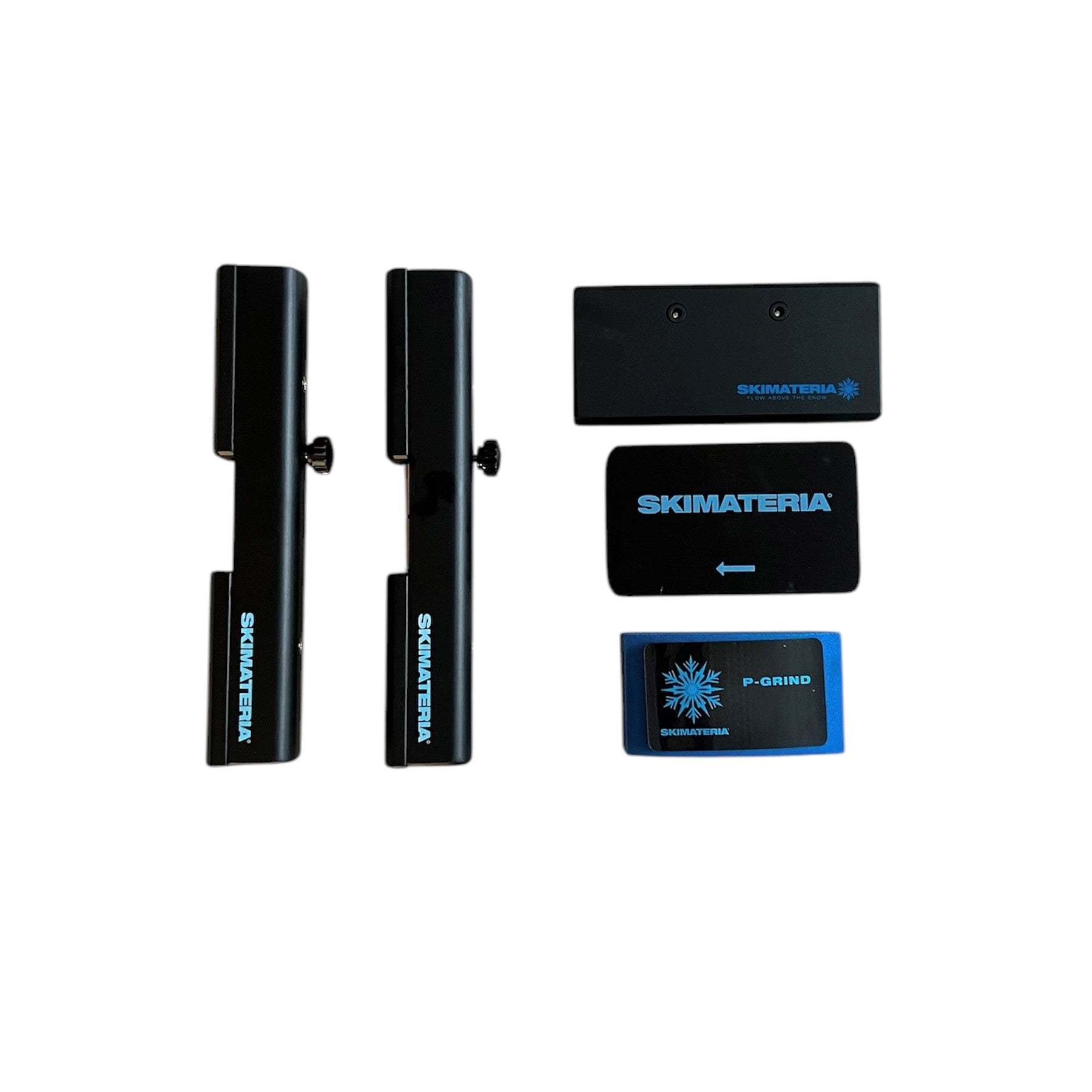
Do it yourself – better than a machine
With the Starter Kit, you have everything you need to replace the stone grinder. Scrape fresh base material and apply the right structure for the day.
What does the research say?
Tests show that a correctly scraped and structured ski often glides as well as or better than a stone-ground one, especially over time, as you can easily ‘freshen up’ the surface yourself before every race instead of skiing on an old grind.
Ready to take control?
Learn exactly how to use the tools for the best results.