


Ski wax for cross-country skis: the ultimate guide & the pros' secret

Ski wax for cross-country skis: the ultimate guide
Looking for the best glide wax? Here is the secret the pros do not talk about: without the right groundwork, it does not matter how expensive your ski wax is.
Every year, Swedish skiers spend thousands of kronor on expensive wax in the hunt for the perfect glide. But what if we told you that the wax you buy only accounts for about 5% of your glide?
The truth about glide: the hierarchy you need to know
To understand why your skis glide (or do not glide), we need to look at what actually creates friction against the snow. Research in tribology shows a clear hierarchy:
- 80% The ski (camber): If the camber is wrong, nothing else matters.
- 15% The structure (base): This is where Skimateria comes in. The right structure drains the water film.
- 5% The wax: The finishing touch that adapts the surface chemically.
Many people start at the wrong end. They buy expensive fluoro-free wax but apply it to a base that is ‘dead’ and lacks the right structure.
How to wax cross-country skis: step by step (the right way)
To get the most out of your wax, you first need to prepare the base. Here is the method that gives you world-class glide.
Step 1: Create the right structure (the most important step)
Before you even look at the wax tin, you need to open up the base and create a structure that can handle the moisture in the snow. Use a sharp steel scraper (R-Cut) to ‘plane’ fresh base material and a structure tool to create channels.
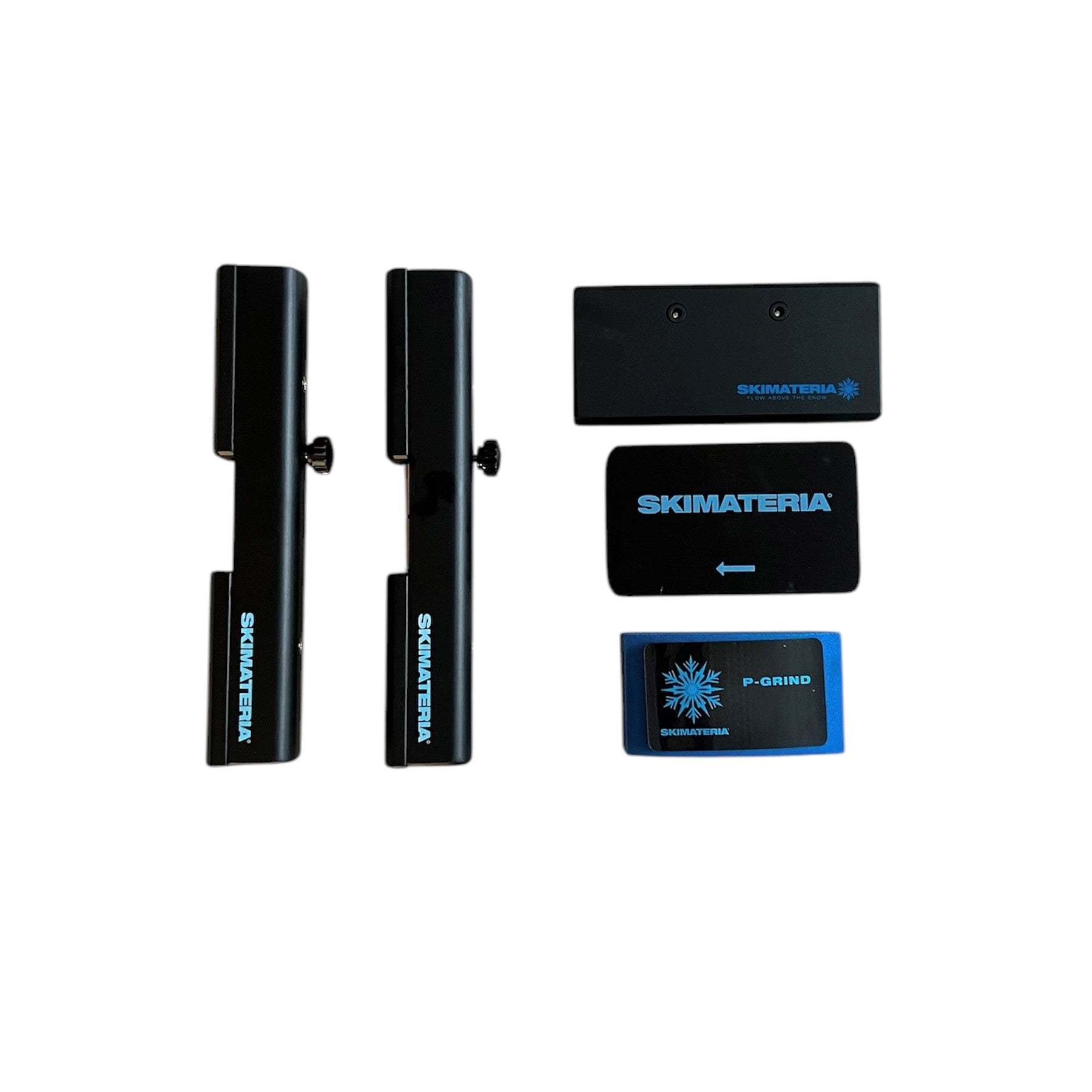
Start here: Skimateria Starter Kit
Everything you need to get started with scraping and structuring. The foundation of all glide.
Step 2: Clean and wax
Once the structure is in place and the ski has been brushed, it is time for glide wax. Because you already have a mechanical structure, you do not need as much wax.
 Skimateria Race Glide Wax – Buy now →
 Performance S Universal – Buy now →
- See all wax – Go to the shop →
Step 3: Brush and polish
The final step for the best glide is the finish. Brush up the surface again and polish with a nylon brush or polishing paper for a mirror-like surface.
Want to learn the whole method?
We have a complete guide to optimising your skis for all snow conditions.