


Poor ski glide despite waxing? Here is why
Poor ski glide despite waxing? Here is why
You have done everything right. Cleaned, waxed and brushed. Even so, your ski glide is poor and it feels as if your skis are ‘sticking’ to the snow. The answer is probably not that you chose the wrong wax.

Why your skis ‘stick’ to the snow
When you ski, friction creates a thin film of water between the base and the snow. This is good – it is the water you glide on.
But if your base is too flat (which it often becomes after many waxings, or once the stone grind has worn down), the water film becomes too large. A vacuum forms. The ski sticks to the snow just like two panes of glass with water between them.
This is called ‘suction’
It is the most common cause of poor glide on cross-country skis, especially in wet snow or around zero degrees. No wax in the world can solve this problem chemically.
The solution is not more wax – it is structure
To break the suction, you need to drain away excess water. You need air channels in the base. You need structure.
This is where many recreational skiers go wrong. They try to solve the problem with more wax. But wax cannot drain water. Only a mechanical structure can do that.
How to fix your glide (without handing in your skis)
With the Skimateria method, you can create and adjust the structure yourself, right on the trail or in the wax room.
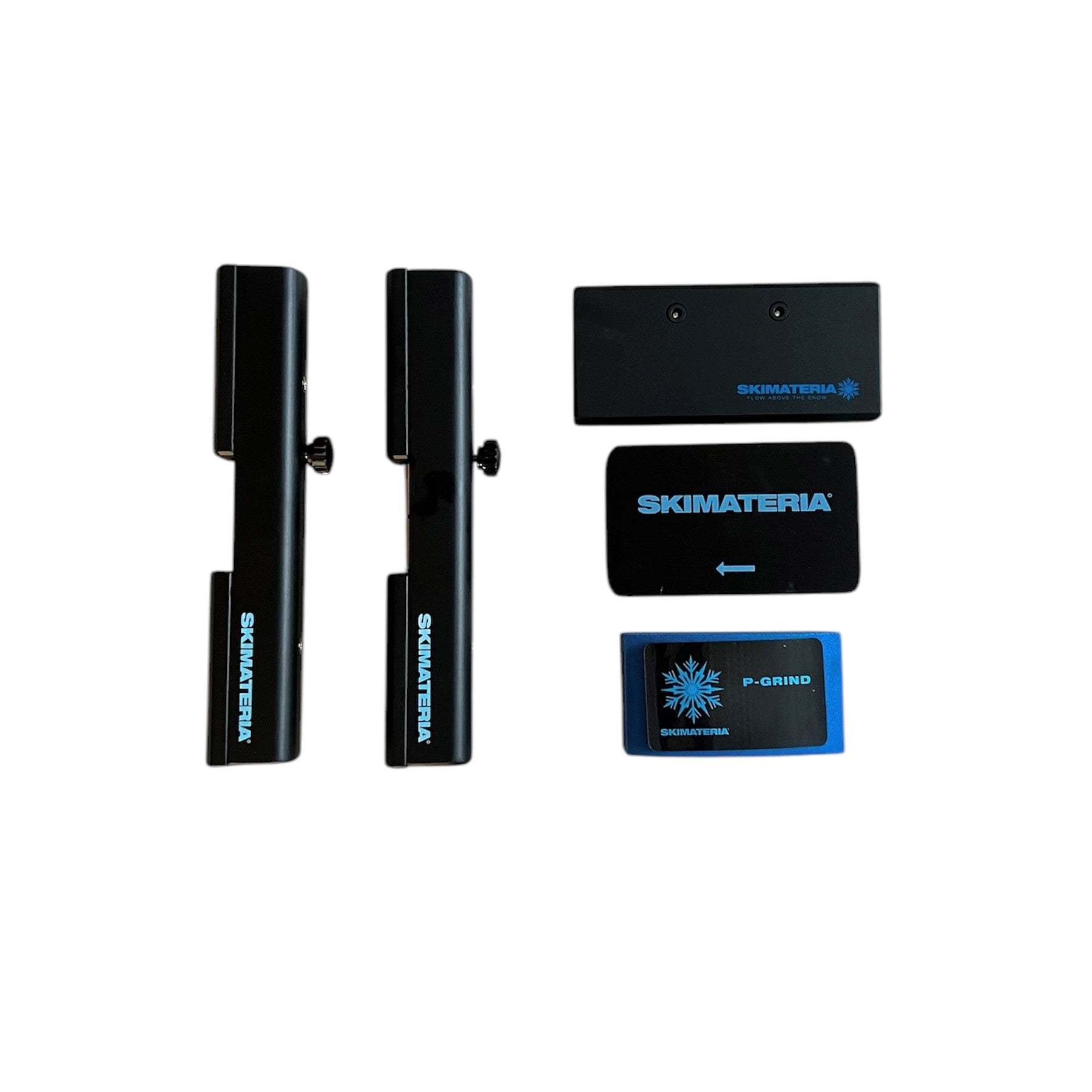
The solution to poor glide: the Starter Kit
Contains a scraper (to reset the base) and a structure tool (to create drainage). Break the suction and get your glide back.
But what about the wax?
Wax is still important, but its role is to adapt the surface chemically after the structure has done the mechanical work.
Think of it like this: Structure is the engine that drives the glide. Wax is the oil that lubricates the engine. If the engine is broken (wrong structure), it does not matter how good the oil (wax) you pour in is.
Learn the whole method
Want to know exactly which structure you need for today's snow conditions?